Agora Education mattballin.com—my older site (not fully current, but has more on my teaching philosophy)

Fall 2026 Classes

I'm Matt Ballin, and I teach small, individualized online classes on history, literature, writing, grammar, and thinking.

I have three classes starting the week after Labor Day: US History, The Art of Figuring Things Out, and Sentence Diagramming. (I also have a few minor offerings described below.)

All main classes meet weekly for an hour, except US History, which meets twice weekly. Classes are $30/session, billed monthly. If you're not thrilled after your first three sessions, I'll refund you in full.

Class times are not yet final: while the days are set, classes may be offered at 2:00, 4:00, and/or 6:00 Central depending on interest. Your feedback will help me determine which can run. Please use the form at the bottom of the page to let me know which slots could work for you, and I'll confirm at the beginning of September.


US History

Mondays and Thursdays · first session Thursday, September 10 · middle school through early high school

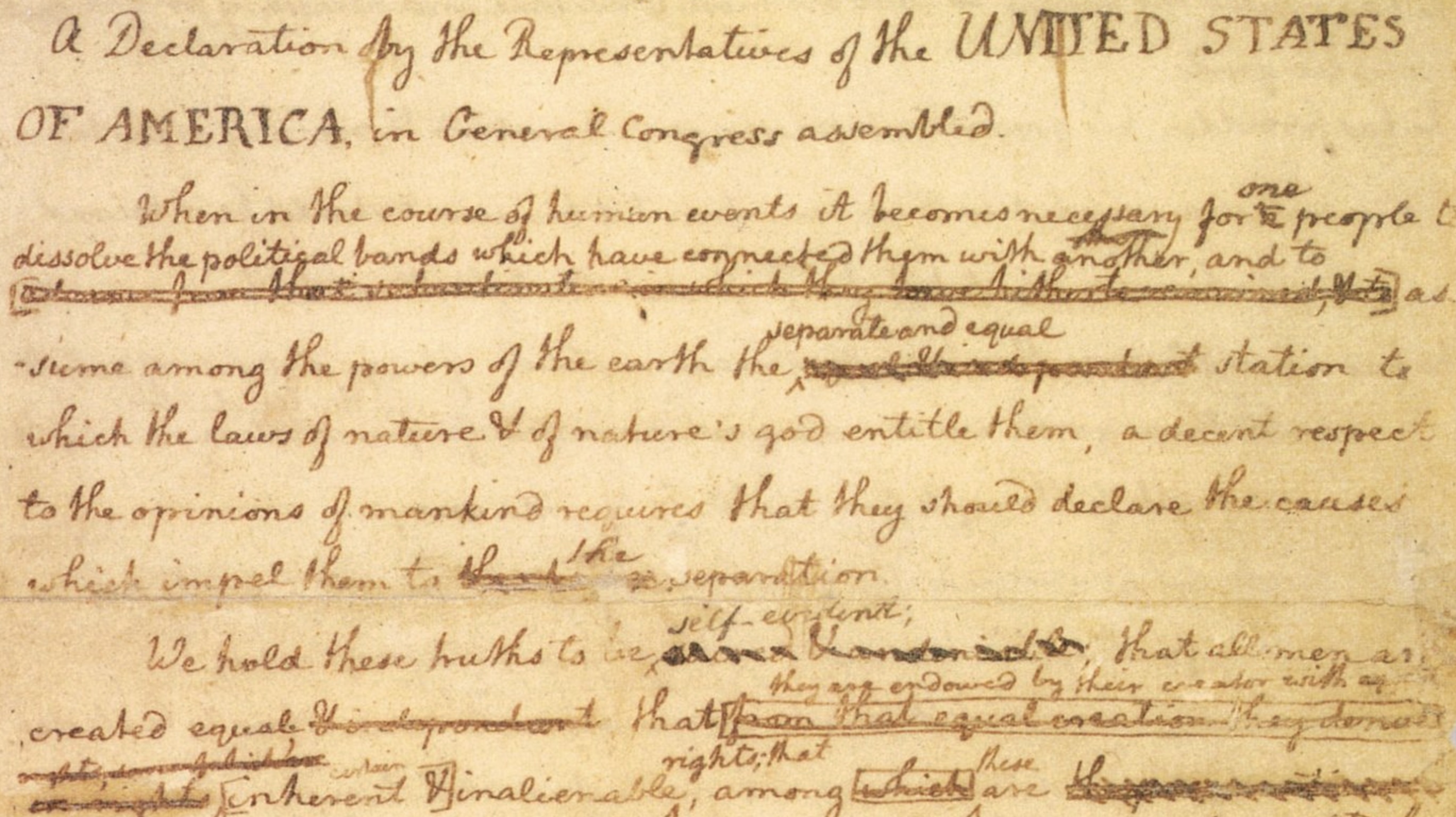
A detail of the handwritten rough draft of the Declaration of Independence, showing the words "sacred & undeniable" struck through and replaced.
Why did Jefferson's draft of the Declaration of Independence say that rights were “sacred and undeniable,” but the final draft said they were “self-evident”? What word did Jefferson scribble out and replace with “citizens”? We understand history better when we see not just the results, but also the reasons and the process.

This course aims to provide US History as it ought to be learned: in context, in depth, and as an exciting story understood from the perspective of the people who lived it. Classes are discussion-driven, with students regularly bringing their knowledge of history to bear. They'll take on the roles of historical figures, make evidence-based predictions, and build foundations for their own independent, reasoned views of the world today.

The class runs for two years, which gives us space to explore the parts of history that get glossed over in a typical one-year course: the colonial period, for example, or the proposals at the Constitutional Convention that didn't make it to the final document. We dig deep on controversies and conflicts of ideas, and I hold to a strict principle of keeping my own views out of the classroom. My role is to encourage students to think well—often by playing devil's advocate and by pressing them to ground claims in evidence—not to lead them to any particular conclusions.

This is a hyper-customized class. There's no textbook; I write most of the readings myself, and at this point there are hundreds of pages of them. Doing this lets me lay precise foundations for the discussions students will get the most out of, temporarily hold back the “spoilers” that could make those discussions impossible, and, I hope, draw out the adventure and excitement of history that so many textbooks manage to make dull. We also read lots of primary sources, which in the first year are often accompanied by a “translation”: a plain-English version that can be read alongside the original.

The first year also leans heavily on games and historical problem-solving. Students might measure the earth the way Eratosthenes did (yes, it's relevant), play a competitive game to experience the effects of British trade restrictions, run a currency-and-inflation scenario about the financing of the Revolution, and advise Washington on whether to assume the state debts.

Students and families are in charge of how much time they wish to commit between sessions. I provide work options regularly, most commonly in the form of writing prompts on topics of upcoming class discussions. This means that there are opportunities to share work in class without other students being stuck in “spectator mode”; everyone can contribute, and the students who write (or even just think) about the prompts in advance can enjoy the satisfaction of being extra prepared. There are no grades and no tests. I do ask that students do their best to keep up with readings between classes, but everything beyond that is optional.

Tell me you're interested →

The Art of Figuring Things Out

Wednesdays · first session September 9 · recommended for middle school, and early high school works too

Before you read, try a reasoning challenge

A tip: don't let your mind go into an artificial “riddle-solving” mode. There's no trick wording, and I didn't plant some hidden detail that everything else depends on. Just think about it the way you'd think about anything puzzling in your day-to-day life.

You and some friends have started taking walks a few times every week down a well-used hiking trail on the outskirts of town. It's shaped like a loop, about four miles from beginning to end; it has just the one entrance and there aren't any side trails. You've noticed a strange pattern: the only place you see much litter is a single quarter-mile stretch, a little past the halfway point. Before and after that stretch, the trail is quite clean. What might explain this?

(You don't have to stick only to the facts in the scenario, by the way—this isn't a whodunnit. Feel free to speculate about what unknowns might have caused this. And once you've done so, think: how do you feel about your answer? You'll find an explanation at the very bottom of this page.)

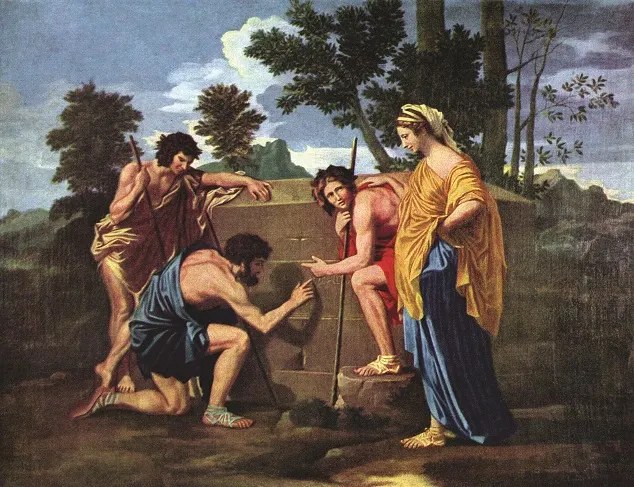
Nicolas Poussin's painting of shepherds gathered around a tomb, tracing an inscription with their fingers.
Nicolas Poussin, The Arcadian Shepherds, c. 1638. They haven't figured out this inscription yet, but they're not giving up!

The goal of The Art of Figuring Things Out is to help students make the best use of their own minds: to think more effectively and independently. There are many classes out there with similar goals, of course, and many of them are valuable, but few capture the breadth of what it means to think. Some lean toward formal logic and argumentative structure, offering tools for winning debates and honing academic essays. Others focus on hot-button topics: social media literacy, the issues in the headlines, and so on—even though these “of the moment” issues may not be the priorities of the future. All of this can be worthwhile, but take a moment to think about how much these approaches leave out.

Consider the following situations:

  • Orren is a month into middle school, and he just got his second math test back. It's another F. He remembers when his fifth grade teacher would tell him, trying to be reassuring, that “not everyone's a math person.” He had wondered at the time if it was a polite way of saying he was bad at math. Now he's sure that it was—and that it was true.
  • Priya has become convinced that her lucky socks help her win at soccer. Her brother laughed at her and called it a “dumb superstition,” so she made a spreadsheet comparing wins to socks worn. The numbers lined up: her team has won almost 30% more games when she's been wearing the lucky socks. Now she's planning to wear them to every game... and she's considering whether she should stop washing them, too.
  • The end-of-year trip got canceled because someone stole money from the fundraiser envelope, and Sarah heard that it was Daniel. They were best friends in elementary school, and even though they've grown apart a bit since then, Sarah would have ignored the rumor if she'd only heard it from one person. But she heard it from three different people, none of whom even hang out with each other. What are the odds? When Daniel calls her in the afternoon, Sarah doesn't bother to pick up.

There's something wrong with the thinking in all these cases—but what habits and skills would these kids need in order to have a better chance of getting it right?

Orren's problem is that he settled on the first explanation that came to mind. There might be all kinds of reasons why that particular explanation came to mind first, but the point remains: he didn't keep looking. What if the tests were unfairly hard? (Did other students in the class do poorly, too?) What if his fifth grade teacher had actually been talking about himself not being a “math person,” and Orren just needed a teacher who could explain it better? There might be all kinds of other explanations—and if Orren was in the habit of not stopping at the first that came to mind, he might have discovered them.

Priya took one good step: she collected data. But when she saw that wins lined up with wearing her lucky socks, she didn't stop to think: does that mean the socks caused the wins? If she knew to dig deeper than correlation, she might realize that the games she usually wears those socks to are home games; for away games, her dad packs her bag and grabs socks at random. This realization wouldn't prove anything by itself, but she would, at least, have something else to test before giving up on hygiene.

Sarah gave credence to the rumor because she heard it from three people who don't hang out with each other. She didn't consider whether they might have anything else in common, though, and when she brushed off Daniel's phone call, it was based more on an emotional reaction than on a conscious thought process. If she thought it through more, she might have realized that even though the three people don't hang out, they do eat lunch around the same corner of the cafeteria, making it entirely possible they'd all overheard one person blaming Daniel. How confident should she be in the rumor? She might think it through and decide 15%, maybe 20% at most—not enough to end a longtime friendship over. It's still a bit of a gut sense, but it's a thoughtful one.

Most critical thinking classes make one big assumption: there's already an argument. Students read the provided passage and find the fallacy, or they compare the strengths of two essays. Those are useful skills, but a lot of the real challenges in life are ones where you're starting from scratch. How do you come up with hypotheses of your own? For that matter, how do you make the sorts of observations that would lead you to notice that something needs explanation in the first place?

Here's an oversimplification of the process that students will practice in this course:

  • Notice that something needs explaining
  • Describe it precisely: what do I actually know, and what am I assuming?
  • Generate possible explanations without settling for the first/most obvious
  • Analyze them: do they hold up?
  • Consider how they could be tested to determine which is right.

Running throughout this will be the theme of calibrating confidence. Many classes encourage students, as a point of rhetoric, to make bold, confident claims. In this class, students will be encouraged to earn that sort of confidence—and, when they haven't, to use terms like “likely,” “possible,” and “probable” with precision.

The two semesters

Each semester of this class can stand alone: they complement each other, but the first isn't a prerequisite for the second. During the first semester, we'll focus on thinking about the world: situations, systems, and events. The second semester will shift the focus to other reasoning with and against other people's minds: for example, how to “step inside” views you don't hold to understand them better, how to catch yourself when your own mind starts coming up with reasons to believe what you want to believe, and how to test claims that are made by others.

Tell me you're interested →

Sentence Diagramming

Tuesdays · first session September 8 · middle school and up

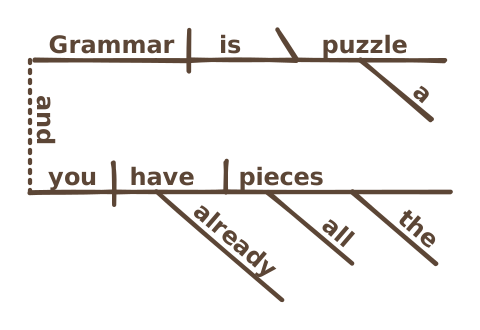
A sentence diagram of: Grammar is a puzzle, and you already have all the pieces.

Sentence diagramming is a way of analyzing a sentence and drawing out how it actually works—the role of each word and clause, and how they all relate to one another. It turns grammar into something like an analytical puzzle, rather than a set of rules to memorize. The small group of students I did this with last year enjoyed it so much that they asked to continue through the summer!

No formal grammar background is needed for this class. I teach the grammatical concepts as they come up, and for students who want extra review on the foundations, I'm working on an app customized for this course that they can use between sessions. (My current students are testing it now.) For making the diagrams themselves, we use letsdiagram.com, which makes it easy for students to share and discuss their work during class; they will also use this website to work through practice diagrams between sessions.

Tell me you're interested →

Also Offered

Modern America, 1960 to the Present

My first US History cohort reached the early 1960s and will continue toward the present with once-weekly sessions. For most new students I would recommend starting from the beginning with the full US History course. If the modern era alone is of interest to a particular student, however, I'm open to new enrollments to this group. Recommended for late middle school and early high school. If you're interested, reach out and let's talk.

Individual Tutoring

Writing, history, and literature, plus academic coaching (organization, prioritization, time management). Online, or in person around Austin. $65 an hour online, $65+ in person. Email me to discuss.

The Sunday D&D Campaign

I run a Dungeons & Dragons group for some of my students, and we have one spot open. It's a great time in the story for a new character to join the adventure! Sundays at 3:00 Central for 1.5–2.5 hours, $20 a session, online. The current players range from ten to fourteen years old. No prior experience needed: many of our current players were new to D&D.

General info about classes

Price

$30 a session. Most classes meet once per week; US History meets twice a week.

Billing

Monthly and in advance, for that month's scheduled sessions. Anything that ends up not being held is credited back.

Refund guarantee

A student's first three class sessions are fully refundable, no conditions attached. If it isn't right for your kid, you lose nothing but a bit of time.

Class size

Classes are capped at eight students, and generally run when at least four are enrolled. Telling me your time preferences ASAP makes it more likely your section will run!

Where

Online via Google Meet. (I'm in Austin, but my students are nationwide.)

What Families Say

"Matt creates his own readings for students, and they're excellent—careful and easily accessible distillations of influences of any particular event... Matt has cultivated an approach that disguises his feelings or opinions about any given topic in order to allow the students to range free, avoiding the trap of aligning with their teacher."

Jim T., parent, current US History cohort

"The details and specifics of names, dates, and locations are covered, but they're presented as interesting and interconnected stories about real people with real concerns."

Lucy R., parent, current US History cohort

"I watched my son truly gain an appreciation and love for history, so much so that he devours all he can through books and youtube. He's constantly sharing with me things he learns, facts, dates, situations."

Tara M., parent of a former student

"To this day, he is one of their all-time favorite teachers... With their knowledge, they were able to make meaningful connections in other classes they were taking."

Jeanette S., parent of two former students

About Matt

I've taught writing, history, and literature to students from elementary through high school for almost twenty years. I hold a Montessori certification through the Association Montessori Internationale, and I used it to build and lead upper elementary and lower adolescent classrooms in California and Texas. I've written curricula for two national networks of private schools, and I spent several years traveling as a trainer and mentor to other teachers.

I was the kid who packed a library into the back seat of the family car so I'd never run out of reading options on a road trip; when I was a teenager, I only wore pants with extra pockets for a paperback or two. I hope to help my students discover and hold on to that same love of learning. The car and the pants may change, but the spirit endures.

Matt Ballin, holding a cat.
There are more flattering photos, but this one has a cat.

Questions Parents Ask

What if a class turns out not to be the right fit?

Then you don't pay for it. I'm confident most students will love my classes, but if it turns out that online isn't the ideal format for your child or something else isn't clicking, just let me know before the fourth class and I'll refund the first three sessions in full. I'd much rather a student gracefully exit in the second week than sit through a year of something that isn't right for them.

My child is a bit younger or older than the range you list. Should we still ask?

Please do—kids are individuals and the ranges are always a rough estimate. In many cases, older students would do fine in my classes as long as they don't mind being in a group of younger students. If your child is younger than the listed range for a class, feel free to reach out so we can discuss. I would just want to ensure they're ready for the content and the types of discussions we'll have in class.

Can we join a class that has already started?

Usually, as long as there's space. We review key context from past topics regularly in US History, so new students won't end up lost, and skills in Figuring Things Out recur in different forms rather than building on each other as prerequisites. Sentence Diagramming is the exception: diagramming skills do build as a sequence, so a student joining partway through may need one-on-one tutoring first to catch up. Email me to discuss.

What if none of the three times for a class can work for us?

Say so on the form below and tell me what would. If there's enough demand and it works for my schedule, I'm happy to consider alternative days/times.

Do we commit to a full year?

No. There's no minimum term and no registration fee, and you're billed month by month.

What if my child misses a class?

Academically, occasional missed sessions aren't a big problem. We review regularly, and when it makes sense I try to send out session summaries for absent students.

On billing, so there are no surprises: since each enrolled student holds a space in the class, the bill is based on the sessions I hold rather than on individual attendance. A session your child misses is still charged for. Sessions that don't happen at all—a holiday, say, or a class I have to cancel because I'm sick—aren't charged: they're credited back on your next invoice.

How does payment work?

I use a payment and scheduling platform that accepts PayPal and most major credit/debit cards. At the beginning of each month you'll get an invoice for that month's scheduled sessions. If a session ends up not being held, it comes off your next invoice as a credit—or, if needed, I will provide a refund. I don't require deposits and I don't charge registration fees.

Is there homework? Is anything graded?

Nothing is graded in any of my classes, and there are no tests.

In general I keep between-session expectations as light as I can, since I know some students have very busy schedules; however, I also try to provide options for those who wish to invest more time in learning. What this looks like varies class-to-class. The short version: US History expects between-class readings and will provide other work options; Sentence Diagramming expects completion of some diagrams between classes, with other options for grammar practice being offered as options; The Art of Figuring Things Out will provide students with reasoning challenges they can consider between classes, but they can still participate fully if they don't have time. Please see the descriptions above for more information, and let me know if you have a question that isn't answered there.

What kinds of students join your classes?

It's a real mix! My students come from across the country; some are homeschooled, some attend traditional schools. Because the group sizes are very small, everyone gets time in the spotlight, and we get to know each other quite well; the vibe is productive, collaborative, friendly, and fun. (Last summer, a few of my US History students even met up in person during a vacation!)

Do your classes push a political viewpoint?

Emphatically, no! Keeping my views out of the classroom is a discipline I take quite seriously—not just passively, in the sense of avoiding open advocacy, but in more subtle ways, like ensuring that I challenge students to defend and support their claims equally whether or not I would personally endorse them. (If I err, it might be in occasionally overcorrecting. The one time a parent has mentioned thinking I may have “let my cards show” during the US History class, it turned out to be in favor of a view I don't even hold.)

Do your classes align with Common Core or state standards?

No. When designing my classes, curriculum, and resources, I make decisions based on what's worthwhile for students: what's worth knowing, what skills are worth practicing, and how we can do so in a way that's fulfilling and enjoyable. (That's why, for example, I can spend several months on the colonial period instead of a year on state history.) To the extent that my approach lines up with state or national standards, it's entirely by accident. If you need documentation for any purpose, though (homeschooling reporting, application to get credit at your school for my classes, etc.), I'm happy to provide what I can: e.g., a course description, a topic list, or an estimate of hours. Just ask.

What do we need, technology-wise?

Not much. Students need to be able to join a Google Meet: a computer is ideal, but a tablet works too. No Google account is required, though having one makes a few things slightly smoother. Some classes regularly use an outside site (e.g., Sentence Diagramming uses letsdiagram.com), and I'll occasionally make use of other sites as need arises: e.g., I may send out links to historical videos on YouTube from time to time. A printer isn't necessary, but students in classes with regular readings often like to print them out and mark them up. (Reading on the screen is fine, too, though!)

The Answer

If you didn't already consider the reasoning challenge in the section on The Art of Figuring Things Out, you might want to do that before you keep reading. :-)

Ok, fair warning has been given! So... You might have realized that there isn't just one single, tidy explanation of why all the litter was in one particular area. How many explanations did you consider before you stopped? Here are just a few very reasonable possibilities:

The point of this particular reasoning challenge isn't to get the right answer: at this stage, there's no way to know which one is correct. (How one might test hypotheses would be another topic.) The point is to see the difference between finding one possible explanation for something, versus truly exploring the range of possible explanations. A lot of people settle on the first possibility that comes to mind—and, I'm guessing, we've all seen how this can play out when it becomes a habit in life.

A student concludes that a group project partner who isn't pulling their weight is being lazy; he gets mad. Has he considered the possibility that the partner doesn't understand something and is embarrassed to ask? A teacher is upset with a “rude” student who doesn't say hello in the morning. Has she considered the possibility that the child isn't getting enough sleep, or isn't eating breakfast? I worked at a business once that was struggling for customers. The owners assumed they needed to do more advertising. It turned out, only after they'd dumped money into an ad campaign that had little effect, that we just needed a better sign and lighting—people driving by thought, at a glance, that we were closed.

In class, this reasoning challenge could be the springboard for a conversation about not only the value of seeking multiple explanations, but also concrete techniques for doing so effectively. It's just one of the many thinking skills we'll explore and practice during this class.

Tell me you're interested!

This isn't an enrollment form and it doesn't commit you to anything. My first step is figuring out what times work, so I need to know what times could work for you.

Which classes are you interested in? Check as many as apply, then tell me which times could work for each one.

The classes meet on different days, so answer each one separately—being free at 2:00 on a Tuesday doesn't mean you're free at 2:00 on a Wednesday. Checking more than one makes it much more likely a time that'll work for you actually runs.

Also offered

No need to pick times here. D&D is on Sundays at 3:00 CT, Modern America's schedule isn't settled yet, and tutoring times will be worked out individually. Just check anything you'd like to hear more about.

Or skip the form and just email me: [email protected].

Tell me you're interested Contact me